

Fasting has long been used in both historical and experimental contexts. It has recently been popularized by ‘intermittent fasting’ or ‘modified fasting’ regimes, in which a very low-calorie allowance is allowed on alternate days (ADF) or 2 days a week (5:2 diet), where ‘normal’ eating is resumed on non-diet days.
Intermittent energy restriction encompasses dietary approaches, including intermittent fasting, alternate-day fasting, and fasting for two days per week. Intermittent energy restriction may be an effective strategy for the treatment of overweight and obesity.
Intermittent Fasting: A Complete Science-Based Guide to Weight Loss and Better Health
Intermittent fasting (IF) has rapidly gained popularity as a modern approach to weight loss and metabolic health. Also known as intermittent energy restriction (IER), this method focuses on when you eat rather than just what you eat.
But does it really work? And is it the right strategy for everyone?
Let’s break it down in a clear, evidence-based way.
What is intermittent fasting?
Intermittent fasting (IF), also known as alternate day fasting (ADF), periodic fasting, or intermittent energy restriction (IER), is a relatively new dietary approach to weight management.
Intermittent fasting is the absence of food during a prescribed time period.
That involves interspersing normal daily caloric intake with a short period of severe calorie restriction or fasting, in which a very low-calorie allowance is allowed on alternate days or where normal eating is resumed on non-diet days.
Types of Intermittent Fasting
- Fast for a set number of hours each day: Eat within a specific window and fast the rest of the day. You have a window of time during which you eat, and you then fast for the remainder of the day. The number of hours fasted is unique to each individual.
- Alternate-Day Fasting: You then restrict the number of calories consumed on fast days to around 25% of your usual intake. Normal caloric intake ranges anywhere from 1,600 to 2,400 for women and from 2,000 to 3,000 for men, depending on age and level of physical activity
- 5:2 Plan: The 5:2 plan is similar to alternate-day fasting. On five days of the week, you eat normally. On the other two days of the week, you restrict the number of calories consumed to around 500–600. Fast days should not be consecutive days.
- Weekly 24-Hour Fast: Eat normally for six days and fast completely for one day. This style can be very difficult to maintain since it requires consuming only liquids for 24 hours straight.
Common IF methods involve fasting for 16 hours and having an 8-hour eating window. The 16/8 method involves an 8-hour eating period and a 16-hour fasting period. Some people do this by skipping breakfast, but you can also do the reverse and skip dinner or eat early.
Some people do 24-hour fasts twice per week.
During the fasting periods, you won’t eat anything. You can usually drink calorie-free beverages like water, herbal tea, and black coffee.
The dominant nutritional paradigm was “exercise more, eat less.” The concept of calories-in, calories-out alone is just not effective. We should really focus on the connection between our lifestyle choices and their impact on our health.
The Role of Fasting and Hormonal Balance:
Much of the nutritional dogma that we’ve been raised with may now be outdated, like snacking all day long and eating many meals.
Most of what we are doing is eating three meals a day and snacking all day long.
What happens when we snack all day long or consume frequent meals?
Eating all day long overtaxes our pancreas and our digestive system so much that it cannot work properly.
Your insulin wakes up along with you, peaks around 2–3 p.m., and dies down after sunset. And when you start eating along with the insulin cycle, and if you stop eating after sunset, weight loss can happen very naturally.
Insulin is a fat-storing hormone, and when levels remain high, there is more oxidative stress, more inflammation, and more weight gain. When you eat, insulin is secreted by the pancreas to move sugar into the cells. We store the bulk of our sugar in our liver and our skeletal muscle. But when we exceed those storage sites, we store it as fat.
Insulin can be thought of like a system that works best during certain hours. Once insulin goes down at night, growth hormone comes in and repairs the damage done throughout the day. This allows insulin to be refreshed and ready again in the morning.
When it comes to meal frequency, there is a debate over sugar burners versus fat burners.
A sugar burner is someone who consumes a lot of carbohydrates and relies on glucose as their primary fuel source. These individuals are frequently hungry, often experience significant dips in their energy levels, and struggle more with fat loss because insulin levels are high.
In contrast, fat burners tap into fat stores for energy. They have sustained energy, better cognitive clarity, don’t get hungry, and find it easier to lose weight. They also sleep better and age more slowly.
So meal timing and how frequently we are eating are absolutely crucial.
You don’t have to focus too much on the food content initially while setting up your eating window. If you eat healthy food, the outcome will be faster and better, but even if the food is not perfect, giving your body time to rest overnight allows hormones to recover.
A Simple Starting Point
The time difference between sunset and sunrise is usually around 12 hours, which is a very minimum and reasonable fasting window. It doesn’t put extra effort on most people. Only when you extend the fast beyond 16 hours might there be issues.
So starting with a 12-hour fasting window is a simple and effective method.
How to Start Intermittent Fasting: 5 Simple Steps for Beginners
Step 1: Determine Your Eating Window
Track your first and last bite of the day. This gives you your current eating window. Fast for a set number of hours each day: You have a window of time during which you eat, and you then fast for the remainder of the day.
You need to determine your eating window. As soon as you wake up, when you’re having the first bite, whether it’s a coffee or it is a breakfast, you have to look at your watch and note down the time. Then you have to figure out your last bite just before going to bed; what is your last bite? So you need to calculate the difference. For example, if you have a coffee with milk or sugar in the morning at 7 a.m., that is your first bite. Let’s say you have the habit of drinking milk before going to bed at 10 p.m.; then that is your last bite. The difference between 7 a.m. and 10 p.m. is going to be close to 15 hours, and that is your eating window.
Step 2: Reduce the Eating Window
Pay attention to this: you need to decrease your eating window and not your fasting window. You need to stick to an eating window of a minimum of 12 hours.
Let’s say that your eating window is 15 hours. Gradually reduce your eating window to a minimum of 12 hours and eventually to 8 hours if possible.
Step 3: Consistency
Consistency of the eating window is the key. Consistency is more important than duration. If you can do a 12-hour eating window every day for 30 days, that is much better than doing an 8-hour eating window occasionally. It may take weeks or months, but consistency will bring results.
Step 4: Focus on Habit First
You don’t have to focus too much on food quality initially. Once the habit is built, you will naturally improve your food choices. Once it becomes a habit, you will notice that you are losing weight. At that point in time, you yourself will get motivated to focus on the healthy portion of the eating window.
Step 5: Patience
The most important step because this is where your patience will come into play. You need patience for this method to work out. Fat loss takes time. It was a long effort that you have put in so far. It will take the same amount of effort to get the belly fat reduced. It depends on how much interest that you have.
The more effort you put in by decreasing your eating window, the better the outcome you will see.
How will you feel at the beginning?
You will feel dizzy, you will feel hungry, and you will not be yourself. So when you are making a change in the body, your body is going into shock, which will take some time to recover on its own from the new streamlined process.
It is going to take some time. If you are noticing some changes, it is actually good that your body is responding to this method.
The key thing is consistency. Bite the bullet, get the six weeks across, and once it becomes a habit, it is going to be super easy.
Health Benefits of Intermittent Fasting
Beyond weight loss, IF may:
- Reduce visceral (belly) fat around our abdominals and around our major organs
- Improve mental clarity because insulin levels are low
- Increase human growth hormone (HGH), which helps us with lean muscle mass
- Support autophagy (cell repair process). It is only evoked when we are fasting
- Lower blood pressure and cholesterol
- Improve insulin sensitivity
Some research also suggests potential benefits for:
- Brain health
- Memory and learning
- Reducing disease risk
Research on Intermittent Fasting
There is a large body of evidence that suggests fasting can benefit both the body and the brain.
According to Mark Mattson, senior investigator for the National Institute on Aging, part of the US National Institutes of Health, fasting has been shown to improve biomarkers of disease, reduce oxidative stress, and preserve learning and memory functioning.
“The one that we’ve studied a lot and designed experiments to test is the hypothesis that during the fasting period, cells are under a mild stress,” he says.
“And they respond to the stress adaptively by enhancing their ability to cope with stress and, maybe, to resist disease.”
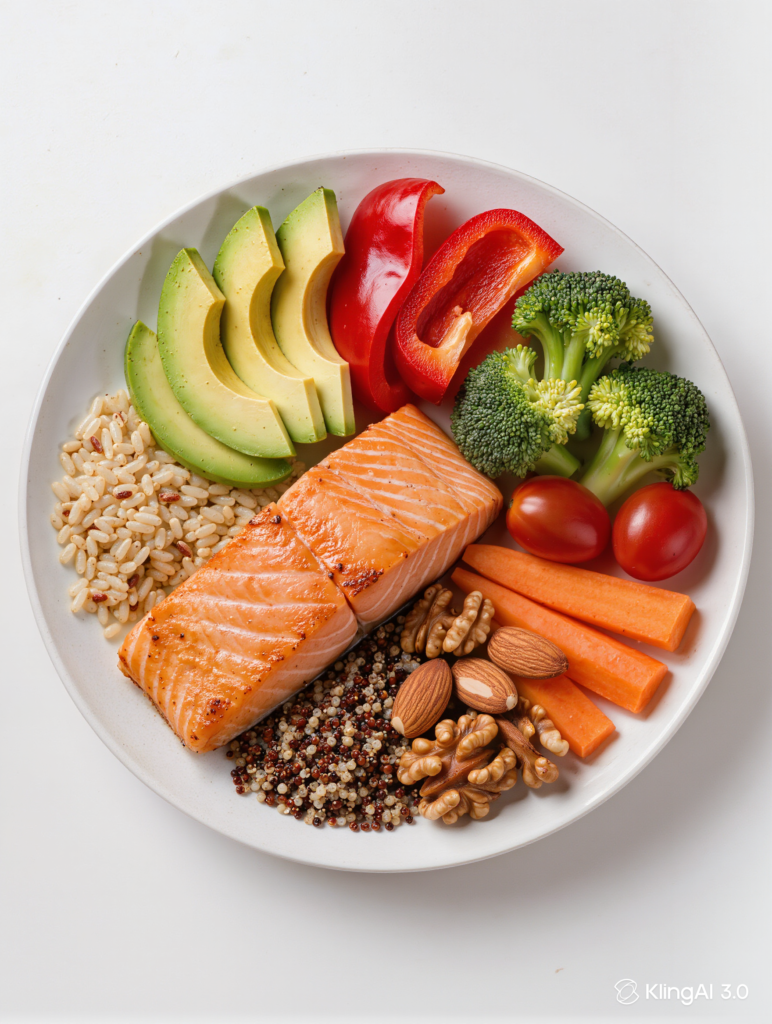
Best Foods to Eat After Fasting
When breaking your fast, focus on whole, nutrient-dense foods:
Healthy Fats
- Avocados
- Nuts
- Coconut oil
- Butter (in moderation)
Protein Sources
- Lean meats
- Fish
- Eggs
Complex Carbohydrates
- Vegetables
- Berries
- Sweet potatoes
- Quinoa
Avoid highly processed foods to maximize results.
Who Should Avoid Intermittent Fasting
Intermittent fasting is not recommended for:
- People with advanced diabetes
- Pregnant women
- Children and adolescents
- Individuals with eating disorders
- Those with chronic heart or kidney issues
- People who are underweight or frail
Final Thoughts: Consistency Is Everything
Intermittent fasting is one approach to losing weight. The key thing is consistency. If you follow this daily for a few months, it can become a habit and easier over time.
Your body will adapt, and results will depend on the effort you put in.